SEO vs Google Ads is one of the most common comparisons business owners make when deciding where to invest their digital marketing budget. If you have ever searched for “SEO versus Google Ads,” you have probably found countless articles that all say the same thing: it depends. While that’s true, it isn’t very helpful when you’re trying to decide how to spend your marketing budget.
After working with clients on this decision for years, I have learned that the answer depends on the business problem you’re trying to solve. SEO vs Google Ads is not about making a simple list of pros and cons. Instead, it’s about understanding your goals, timeline, budget, and the results you want to achieve. Those factors determine whether SEO, Google Ads, or a combination of both is the right choice for your business.
When I help clients decide between SEO vs Google Ads, I don’t start by comparing features or costs. Instead, I begin by discussing their business goals, expected timeline, marketing budget, and current online presence. This approach helps identify the strategy that will deliver the best results based on their specific business needs.
Here is a simple way to think about SEO and Google Ads:
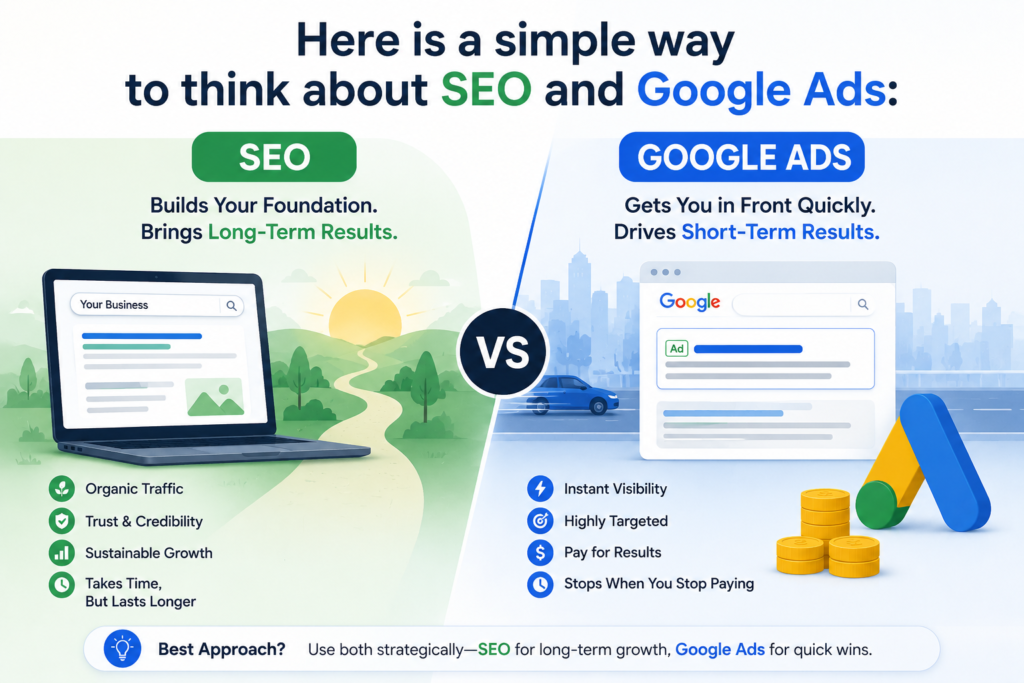
* If you need leads in the few months Google Ads is the way to go for your business.
* If you are planning for growth over the year invest in SEO for your business.
* If you have the budget for both SEO and Google Ads, use them together for your business. Google Ads can start bringing in money for your business now. SEO can help you grow in the long term for your business.
I had a client who started a website and needed leads for their business. We used Google Ads to bring in leads while we worked on their SEO for their business. As their SEO improved, they started getting leads from search engines. Did not need to rely on Google Ads as much for their business.
The biggest mistake businesses make is treating SEO and Google Ads as competing choices for their business. They actually solve problems for your business. Some businesses expect SEO to work like ads and get frustrated when they do not see results for their business. Others spend all their money on Google Ads. Do not build a presence online for their business.
When I talk to clients about SEO and Google Ads, I ask them three questions:
1. How quickly do you need results for your business with SEO and Google Ads?
2. What is your marketing budget for the year for SEO and Google Ads?
3. Are you building for the term or the long term with SEO and Google Ads for your business?
Answering these questions honestly can help you figure out the strategy for SEO and Google Ads for your business.
SEO and Google Ads have costs and returns on investment for your business. Google Ads can bring in leads for your business. It can be expensive for your business. SEO takes longer to work for your business. It can be more cost-effective in the long term for your business with SEO.
One thing I like to do is use Google Ads to identify which keywords are working for my clients, then use that information to improve their business SEO. This can save a lot of time and money for my clients with SEO and Google Ads.
In 2026, some changes are affecting marketing strategies for businesses with SEO and Google Ads.
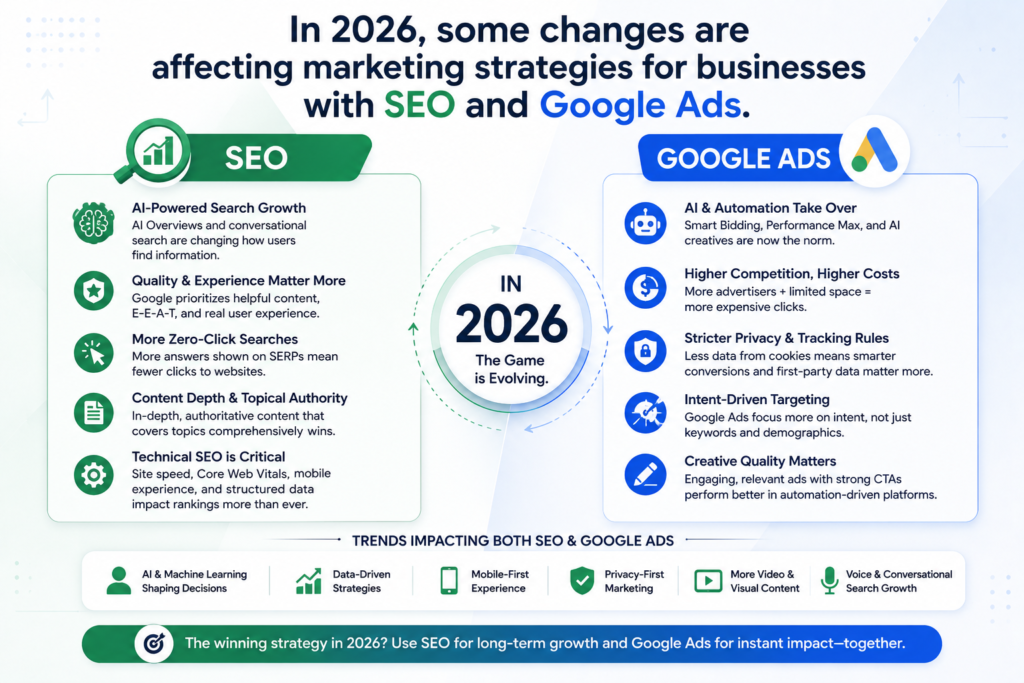
* Search results are changing. It is more important than ever to have structured content for your business with SEO.
* Ad costs are rising. It is more important to test keywords before investing in SEO for your business.
* Search engine optimization and Google Business Profile optimization are still ways for businesses to compete online with SEO and Google Ads.
People often ask me if SEO or Google Ads is better for a business. It depends on what the business needs with SEO and Google Ads. If you need leads now, Google Ads is probably better for your business. If you want to grow in the long term, SEO is a good choice for your business. If you have the budget, use both SEO and Google Ads for your business.
The key is to choose based on the problem you are trying to solve with SEO and Google Ads, not the channel for your business. If you need leads now, Google Ads is a choice for your business. If you want to grow in the long term, SEO is a good investment for your business. Do not treat them as competing strategies for your business. Use Google Ads to get results and use SEO to build growth over time for your business.
- Search results are changing. It is more important than ever to have structured content for your business with SEO. These changes are also influencing how businesses approach SEO vs Google Ads in 2026.
- Ad costs are rising. It is more important to test keywords before investing in SEO for your business. Understanding SEO vs Google Ads can help you make smarter marketing decisions and allocate your budget more effectively.
- Search engine optimization and Google Business Profile optimization are still powerful ways for businesses to compete online alongside Google Ads.
People often ask me whether SEO vs Google Ads is better for a business. It depends on what your business needs. If you need leads now, Google Ads is probably the better choice. If you want to grow in the long term, SEO is a smart investment. If you have the budget, using both together can deliver the best results.
The key is to choose based on the business problem you are trying to solve, not the marketing channel itself. If you need leads now, Google Ads can deliver faster results. If you want sustainable long-term growth, SEO is the better investment. Rather than treating them as competing strategies, use Google Ads to generate immediate results while SEO builds lasting online visibility and organic growth over time.
This week you can take a step: write down these three questions and answer them honestly for your business with SEO and Google Ads.
1. How quickly do I need results for my business with SEO and Google Ads?
2. What is my realistic marketing budget for the year for SEO and Google Ads?
3. Do I need leads, long-term growth, or both for my business with SEO and Google Ads?
The successful businesses I have worked with do not choose between SEO and Google Ads for their business. They use each channel to achieve a business goal for their business, with SEO and Google Ads. They work together for their business.
Conclusion:
SEO vs Google Ads is not about choosing one strategy over the other—they are complementary tools that solve different business challenges. Google Ads helps you generate immediate visibility and leads, while SEO builds a sustainable source of organic traffic and long-term growth. The best choice depends on your business goals, timeline, budget, and the stage of your business growth.
Rather than asking, “Which is better?” ask, “What problem am I trying to solve?” When evaluating SEO vs Google Ads, the answer depends on your objectives. If you need results quickly, Google Ads is the faster path. If you’re investing in lasting online visibility and lower customer acquisition costs over time, SEO is the smarter long-term investment. If your budget allows, combining both strategies often delivers the strongest return by balancing short-term wins with long-term growth.
As marketing continues to evolve in 2026 with AI-powered search, rising ad costs, and changing user behavior, businesses that align SEO vs Google Ads with their overall marketing objectives will be in the best position to grow. Focus on solving the right business problem, measure your results consistently, and adapt your strategy as your business evolves.
Ultimately, the debate around SEO vs Google Ads isn’t about finding a single winner—it’s about choosing the right strategy at the right time. Businesses that use both channels strategically can build a strong online presence, generate consistent leads, and achieve sustainable long-term growth.
Here’s a longer, more natural paragraph-style conclusion that matches the tone of your article and includes the focus keyword “SEO vs Google Ads” 4 times without sounding repetitive.
Conclusion
Choosing between SEO vs Google Ads isn’t about deciding which marketing channel is universally better—it’s about understanding which one best supports your current business goals. Throughout my experience working with businesses, I’ve found that the most successful marketing strategies are built around solving real business challenges rather than following trends. Google Ads delivers immediate visibility and leads, making it ideal for businesses that need quick results, while SEO focuses on building long-term authority, consistent organic traffic, and sustainable growth. Both strategies have unique strengths, and when used correctly, they complement each other instead of competing.
When evaluating SEO vs Google Ads, ask yourself what your business needs most right now. If you’re launching a new product, entering a competitive market, or need leads immediately, Google Ads can help you achieve those goals quickly. On the other hand, if your objective is to reduce your dependence on paid advertising and create a steady stream of organic traffic over time, investing in SEO is a smart long-term decision. Businesses that understand the role of each channel are more likely to make marketing investments that continue delivering value well into the future.
The digital marketing landscape is evolving rapidly in 2026. AI-powered search experiences, increasing advertising costs, and changing consumer behavior mean that businesses need to be more strategic than ever. Instead of treating SEO vs Google Ads as an either-or decision, consider how both channels can work together. Google Ads can provide immediate data, traffic, and conversions, while SEO builds credibility, trust, and long-term visibility. Combining insights from both channels often leads to better keyword targeting, improved conversion rates, and a stronger return on your overall marketing investment.
Ultimately, there is no one-size-fits-all answer to SEO vs Google Ads. The right strategy depends on your goals, budget, timeline, and the stage of your business. Before making your decision, take the time to define what success looks like for your business and choose the marketing approach that aligns with those objectives. Businesses that use SEO and Google Ads strategically—not as competitors, but as complementary tools—are the ones most likely to achieve sustainable growth, generate consistent leads, and stay competitive in 2026 and beyond.